Aquarium Vocabulary in English for Kids
Six to eight new words suit one focused practice session. Aquarium Vocabulary in English for Kids can cover animals, places, actions, and descriptions used around an aquarium visit. Start with fish, shark, turtle, and octopus. Then add phrases such as “It has eight arms,” “The ray is swimming above us,” and “Where is the seahorse?” Practise this set through questions, games, drawings, and short conversations until recall feels confident. The activities suit beginners and multilingual children; older learners can give fuller descriptions.
Core Aquarium Words and Phrases
Group Aquarium Vocabulary in English for Kids by purpose. Children first name what they see, then describe its features and actions instead of memorising a long mixed list.
Choose six to eight items per session. Pair each noun with an action or feature: a turtle swims, a crab crawls, and a fish has gills. A multilingual child may connect the English word with a known concept in another language before repeated English practice.
Putting the Words into Context
Aquarium Vocabulary in English for Kids gains meaning when children build short messages. Begin with sentence frames: “This is a…,” “It has…,” “It can…,” and “I can see….” A beginner can say, “This is an eel. It can swim.” A confident learner can add, “It has a long body and is hiding between the rocks.”
Questions give children a reason to speak. Try “What can you see?”, “How does it move?”, “What colour is it?”, and “Where is it?” Practise aquarium location words: above, below, behind, next to, between, inside, and under. Answers might include, “The turtle is above the ray,” or “The octopus is behind the rock.”
Older children can compare animals instead of listing facts. Ask them to complete pairs such as “A shark is faster than a seahorse,” or “A crab moves differently from a jellyfish.” Let your child read one short fact from an information sign and restate it in simpler English. This combines reading, speaking, and subject knowledge without creating a test.
Activities for Different Ages
School-age kids: Use a picture hunt with four or five animal images. Show one picture and ask your child to find that animal in a book, video, drawing, or aquarium tank. Add movement: glide like a ray, crawl like a crab, or open and close your hands like a shell. Keep turns brief and repeat: “Find the crab. The crab crawls.”
School-age kids: Play “Guess the animal.” One person gives up to three clues without naming it: “It has eight arms. It can hide. It lives in water.” The other guesses “octopus” and creates a new clue set. For a category race, name animals with shells, animals with fins, or animals that move along the sea floor.
School-age kids: Make your child the aquarium guide. They choose one exhibit and prepare a short introduction from an information sign or trusted book. Ask for an opening, three details, and one visitor question. A model is: “This exhibit contains different kinds of rays. Notice how their fins help them glide. Which ray can you see near the glass?”
Practice Ideas That Fit Into Daily Life
Aquarium Vocabulary in English for Kids develops through short recall, not repeated reading alone. Before a visit, study a map or animal pictures and predict what you may see. During the visit, ask one question at each chosen exhibit. Follow signs about touching animals, noise, food, and photography.
Five-minute Aquarium Challenge
Choose one animal. Say its name, two body parts, one action, and one describing word. Make a full sentence and ask a question. Example: “A seal has flippers. It swims quickly. Is it above or below the water?”
After the visit, ask your child to draw one tank and label its animals, objects, and positions. Labels can begin as single words. Next, turn two labels into sentences: “The eel is under the rock,” and “The small fish are swimming together.” The drawing gives writing a purpose without making the task overwhelming.
No visit is required. Build a pretend aquarium with toy animals, paper drawings, or household objects. One person sells imaginary tickets, another guides, and another asks visitor questions. Changing roles keeps repeated vocabulary purposeful.
Common Mistakes and Useful Corrections
Correct the part that changes meaning, then continue the conversation. A child who says “The shark swim fast” has chosen the right noun, verb, and adverb. Model “Yes, the shark swims fast” without stopping for a long grammar explanation.
Children may mix up similar animals. A turtle can live in water or on land, while a tortoise lives on land. A seal has flippers, but a fish has fins. Show the difference with a picture or movement; visual contrast explains it faster than a dictionary definition.
Building Confidence
Understanding comes before independent speech. A child may point to a jellyfish before recalling its name, then produce one word before a full sentence. Each response marks progress. Review known words while adding a small new set, and change tasks before attention fades.
In LearnLink’s 1-on-1 lessons, tutors adjust the language load to each child’s age and English level. A beginner may sort pictures and answer with short phrases. An advanced learner may compare habitats, explain an exhibit, or ask follow-up questions. The goal is flexible use, not a perfect word-list recital.
When a word has several meanings or pronunciations, Cambridge Dictionary is a useful check before turning it into child-friendly examples.
Frequently Asked Questions
How Many Aquarium Words Should My Child Learn at Once?
For a beginner, six to eight new words per session allow meaningful practice. Mix them with familiar words such as colours, numbers, big, small, fast, and slow. Older or experienced learners may handle a larger set but should use each word in questions and sentences. Recall matters more than list size.
Should I Translate Aquarium Words for a Multilingual Child?
A brief translation can introduce a new word or explain an uncertain picture. Then return to English with a gesture, image, or sentence. For example, confirm “gill” in a familiar language, point to the gills in a picture, and say, “A fish breathes through its gills.” Other languages can serve as a bridge.
How Can We Practise If We Cannot Visit an Aquarium?
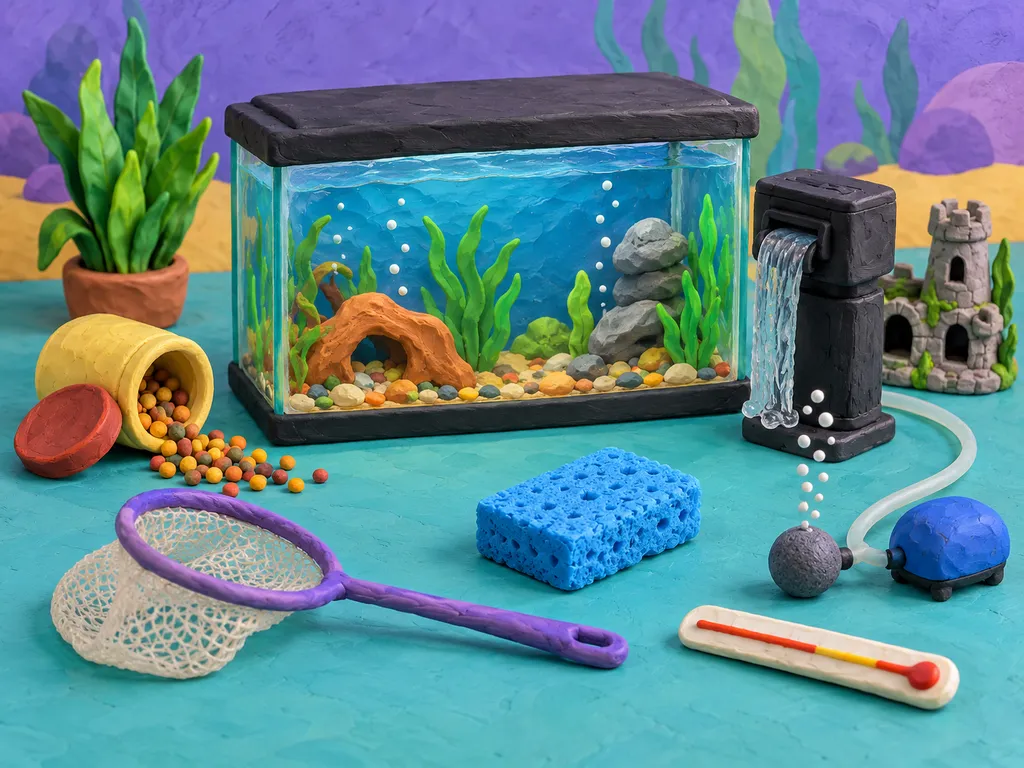
Aquarium Vocabulary in English for Kids can be practised with library books, animal figures, drawings, documentaries, or a homemade paper tank. Ask your child to group animals, describe movement, and place them above, below, or behind objects. Pretend guides can practise questions and answers. Choose age-appropriate media and watch with younger children to connect new words with distinct images.
What If My Child Knows Animal Names but Cannot Make Sentences?
Give one sentence frame at a time. Start with “It is a…,” then add “It has…” and “It can….” Keep the noun visible while your child completes the frame. Later, remove part of the prompt or ask a question. If your child says only “octopus,” expand naturally: “Yes, it is an octopus. It has eight arms.”
Want to see how these ideas work in a real lesson — try a LearnLink trial lesson.
Stay updated on our latest tips and resources by following us on Instagram LearnLink.